
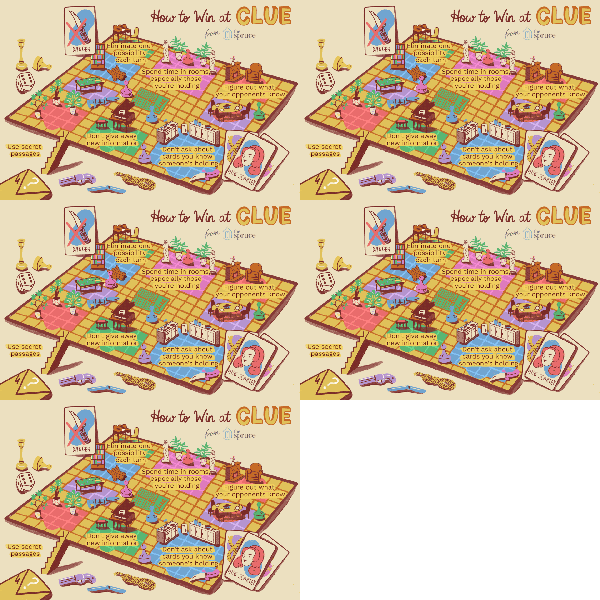
- Figure Out Your Opponents Cards
In Clue, there are 21 cards, six suspects, nine rooms, and six weapons. This means the cards in your hands are not the answer to the mysterious “whodunnit,” where and with what weapon. These three items are stored in the envelope that has the word clue written on the back of it. This game is more of a process of elimination so you will need to mark off your card and pay attention to when someone marks off theirs in case you have the remaining two answers to their guess.
When a suggestion is made within the game the goal is to receive more information. Sometimes if your opponents can show you the same card you have already seen, then you get no new information, and your turn has failed. This means you are allowed the only cards that you have already marked off on your list that you should still ask about are your own cards since nobody else will be able to disprove them. Do not ask about cards you know your opponents are holding.
- Eliminate One Possibility Every Turn
This action is of course, not always possible. That is why once you have eliminated false possibilities you have the upper hand on the rest of the players. The person that completes this task the fastest often wins the game. To this end, you should ideally be making a suggestion every turn. Any turn where you do not make a suggestion is, essentially, a wasted turn.
- Spend Your Time in Rooms
You can only make suggestions in rooms, so traveling on a roll of the dice should be seen as a last resort. When you enter a room, make a suggestion. If someone suggests you and drags you to a new room, make a suggestion there on your next turn.
- Focus on Room Information
You can suggest any character or any weapon from anywhere on the board, but your room suggestions are limited by your location. For this reason, rooms can be the hardest thing to figure out, so you should learn about them whenever possible.
- Spend Time in Rooms You Have
Not only will this let you learn more about the weapons and people, but you can use the unfair summons trick. If another player is about to reach a good room to make a suggestion like a corner room or the likely murder room, you can make a suggestion about that player’s character, which will drag their pawn back to your room. And if that player takes his next turn to make a suggestion in your room, you can simply show your room card.
- Do Not Give Away New Information
If you know which cards you have shown to each player, you can show them the same cards repeatedly to avoid giving away extra information. Never reveal a new card when you do not have to.
- How to Learn Opponent Information
If an opponent repeatedly uses the same item in suggestions, whether it is a location, weapon, or character, it probably means nobody else can disprove that item. If an opponent makes three suggestions in a row about the revolver, chances are very good that the revolver is either the murder weapon or in that opponent’s hand.
- Make Deductions Based on Opponent Information
If you know that one opponent has the wrench card, and you have the Colonel Mustard card, and someone else shows a card to disprove the suggestion of “Colonel Mustard in the library with the wrench,” you know that card must be the library.
 CLUE
CLUE 